How Honey is Made: From Flower to Jar
A jar of honey may look simple, but every golden spoonful is the result of thousands of flower visits, remarkable teamwork inside the hive, and careful handling by the beekeeper.

Honeybees do not simply collect honey from flowers. Flowers provide nectar, a thin, sugary liquid that bees transform through a fascinating process involving enzymes, evaporation, communication, and cooperation.

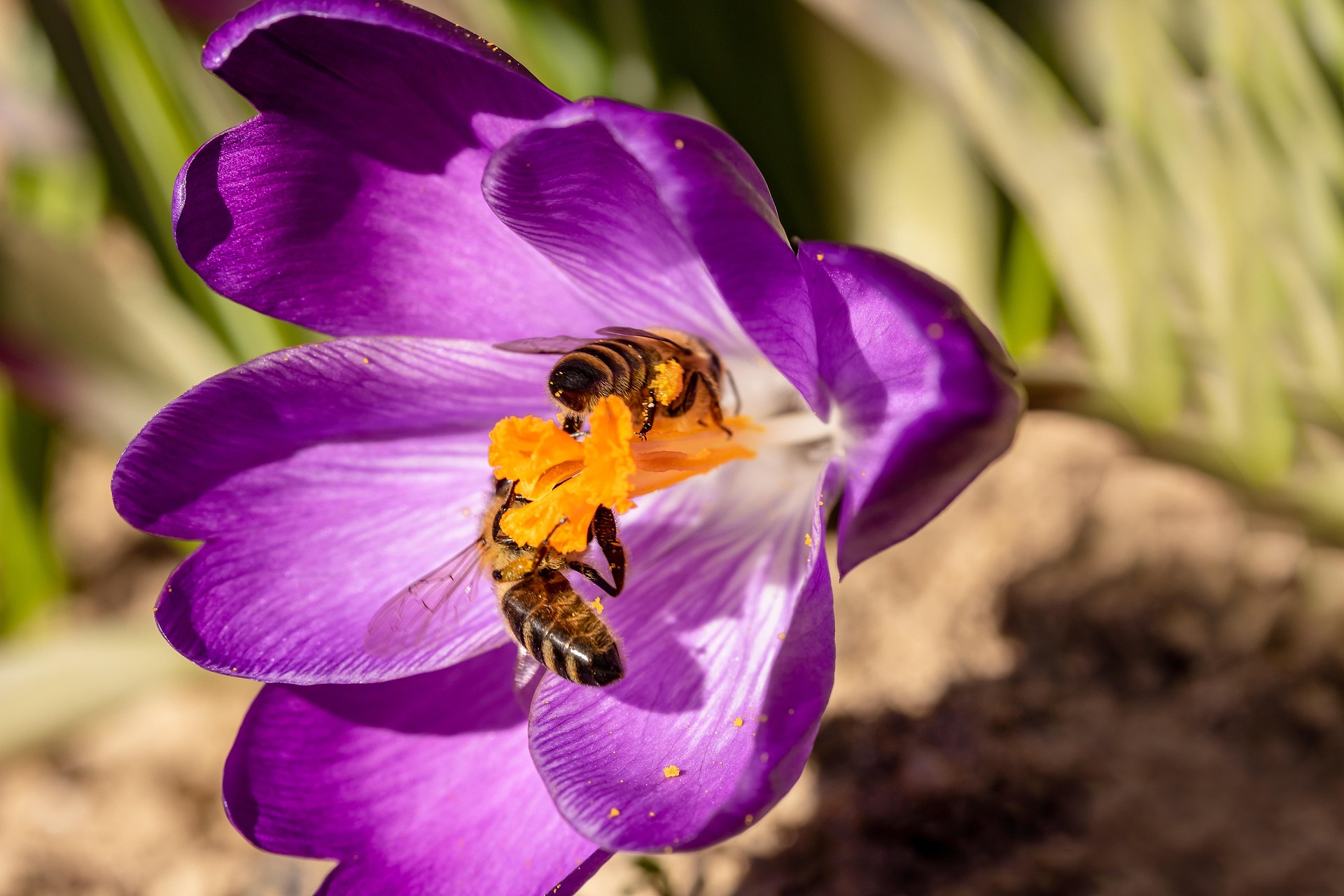
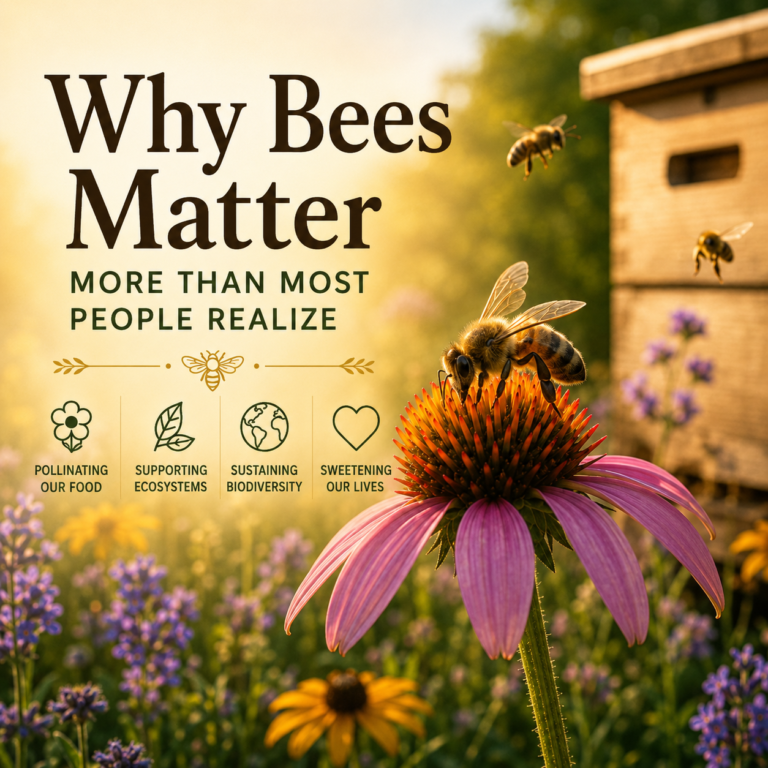
Honeybee on a flower

Let’s follow the journey from flower to jar.

In This Article
Step 1: Forager Bees Search for Nectar
Step 2: Enzymes Begin Changing the Nectar
Step 3: The Forager Shares Her Discovery
Step 4: House Bees Receive the Nectar
Step 5: Bees Remove Excess Moisture
Step 6: The Finished Honey Is Sealed
Why Do Honeybees Make Honey?
How Beekeepers Know When Honey Is Ready
Step 7: Honey Is Removed From the Comb
Step 8: The Honey Is Strained and Bottled
What Does “Raw Honey” Mean?
Why Does Honey Crystallize?
A Spoonful of Honey Represents a Whole Colony
Support Local Bees and Beekeepers
bees on a flower
Bees collect pollen from thousands of flowers each day.

Step 1: Forager Bees Search for Nectar

The process begins when worker bees leave the hive in search of blooming flowers.

Honeybees are attracted to flowers that provide nectar, pollen, or both. Nectar supplies carbohydrates that give bees energy, while pollen provides proteins, fats, vitamins, and minerals needed to feed developing bees.

When a forager finds a good nectar source, she uses her long, tube-like tongue—called a proboscis—to draw nectar from the flower.

The nectar is stored in a special organ commonly called the honey stomach or honey crop. This is separate from the bee’s digestive stomach. The nectar collected there is being transported back to the colony rather than eaten immediately.

As the bee continues visiting flowers, she may also collect pollen on the branched hairs covering her body. Some of that pollen brushes onto other flowers, helping plants reproduce through pollination.

“Every jar of honey holds a journey—from blossom to hive, shaped by the patient work of thousands of bees.”
Wildflower meadow supporting bees and pollinators
Wildflowers provide essential nectar and pollen throughout the growing season.

Step 2: Enzymes Begin Changing the Nectar

The transformation from nectar to honey begins before the forager returns home.

While the nectar is inside the honey stomach, the bee adds enzymes to it. These enzymes begin breaking complex nectar sugars into simpler sugars, including glucose and fructose.

This chemical change is one reason honey differs from the nectar originally produced by the flower.

Once her honey stomach is full—or the available nectar begins to run low—the forager heads back to the hive.

Step 3: The Forager Shares Her Discovery

A successful forager may communicate the location of a valuable food source to other bees.

One way she does this is through the famous waggle dance. By moving in a particular pattern across the comb, the bee can communicate information about the direction and approximate distance of the flowers.

She may also share a sample of the nectar. Its scent and flavor help other foragers identify the type of flower they should search for.
This communication allows the colony to quickly send more workers to productive nectar sources.


Bees use a long, flexible tongue called a proboscis to extract nectar from flowers.
Bees use a long, flexible tongue called a proboscis
to extract nectar from flowers.

Step 4: House Bees Receive the Nectar

After returning to the hive, the forager passes the nectar to a younger worker bee, often called a house bee.

The nectar may be passed between bees several times. During each transfer, the bees continue adding enzymes and processing the liquid.

The house bee eventually places the partially transformed nectar into one of the hive’s hexagonal wax cells.

At this point, however, the liquid still contains too much water to be stored safely as honey.

Step 5: Bees Remove Excess Moisture

Fresh nectar can contain a large amount of water. If bees stored it without further processing, it could ferment or spoil.

To prevent this, the colony works to reduce its moisture content.

Bees may spread the nectar across the walls of the wax cells, increasing the surface area exposed to the warm hive air. Worker bees also fan their wings, creating airflow throughout the colony.

Warmth and ventilation gradually evaporate much of the water. As moisture leaves, the liquid becomes thicker and more concentrated.

This process can take time, depending on factors such as:

  • The water content of the original nectar
  • The temperature and humidity inside the hive
  • The amount of airflow through the colony
  • The strength and size of the bee population

The bees continue tending the nectar until it reaches the consistency needed for long-term storage.

bee fact
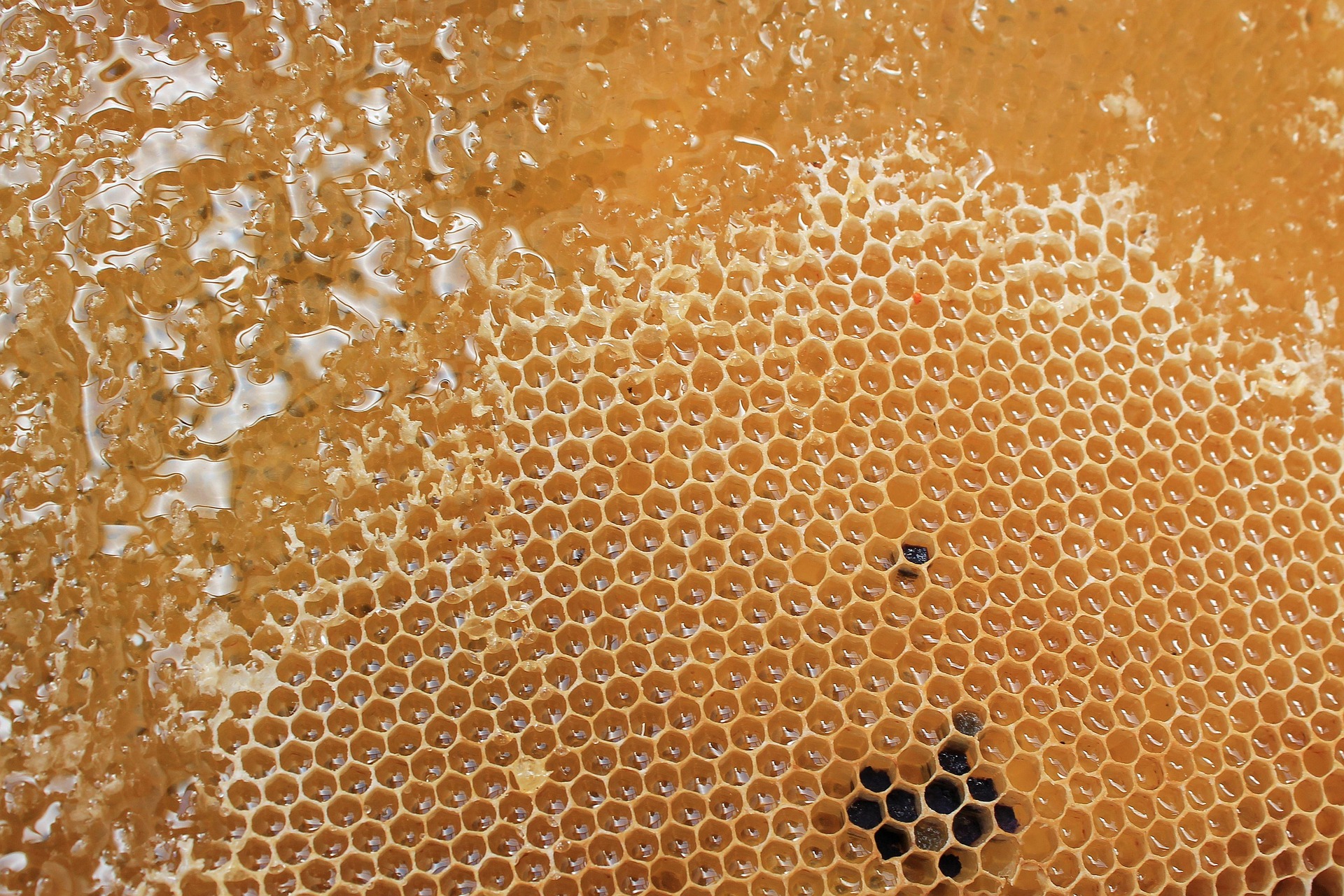
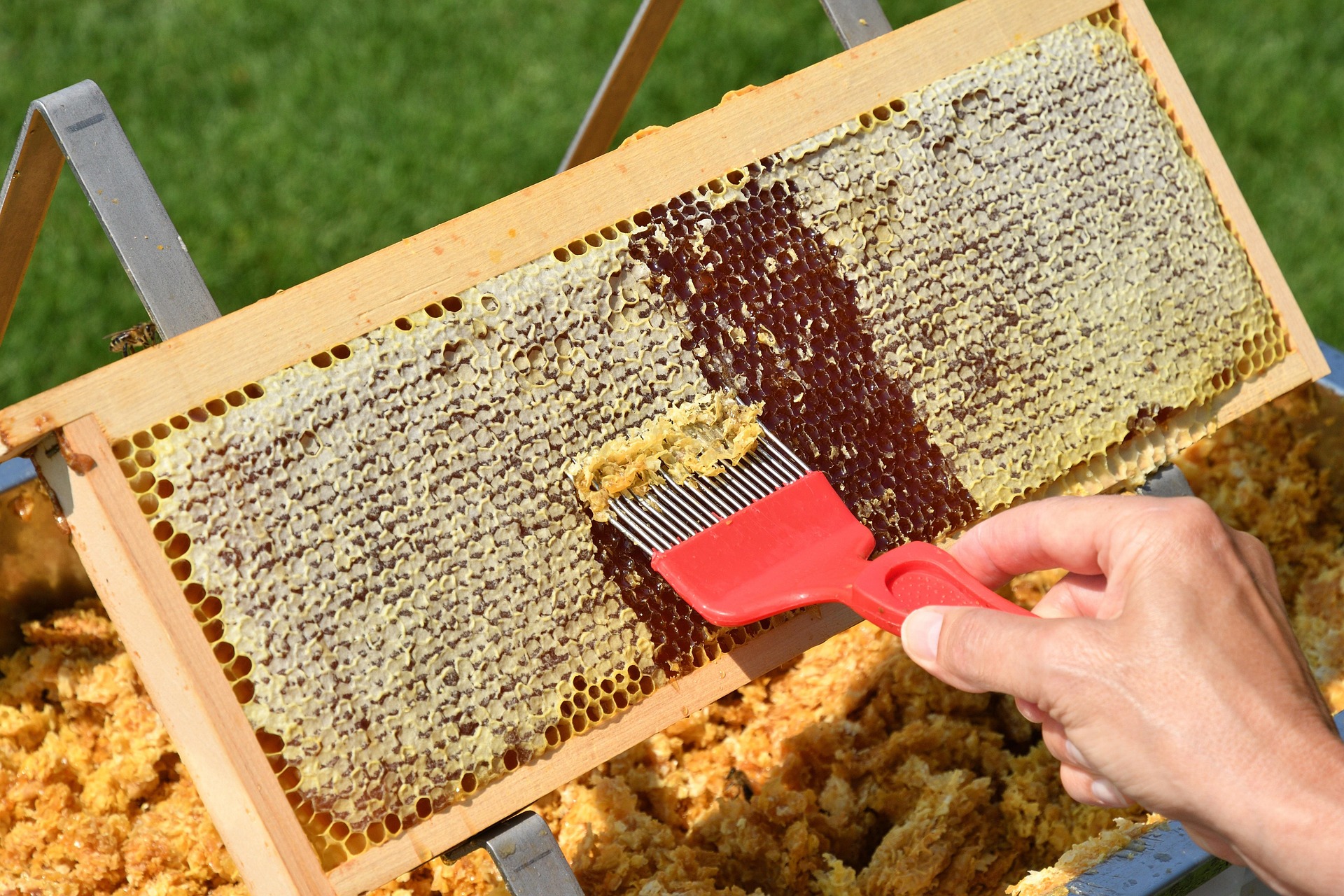
The beeswax layer is removed from honeycomb to harvest the honey.

The beeswax layer is removed from honeycomb to harvest the honey.

Step 6: The Finished Honey Is Sealed

Once the bees determine that the honey is ready, they cover the filled cell with a thin layer of fresh beeswax.

This wax covering is called a capping.

Capped honey is the colony’s stored food supply. Bees rely on it when flowers are scarce, during poor weather, and throughout the winter months when they cannot forage regularly.

A frame covered with capped honey represents an enormous amount of work. Every cell was filled, processed, dried, and sealed by members of the colony.

Why Do Honeybees Make Honey?

Honeybees make honey for themselves—not for people.

Unlike many solitary pollinators, honeybees live together as a colony throughout the year. The hive must maintain enough stored food to support thousands of bees during times when nectar is unavailable.

Honey is especially valuable because its concentrated sugars provide a reliable source of energy. Bees need that energy to:

  • Fly and forage
  • Maintain the hive
  • Care for young bees
  • Produce wax
  • Regulate the colony’s temperature
  • Survive periods without blooming flowers

A healthy colony may store more honey than it needs during a strong nectar flow. Responsible beekeepers harvest only the surplus, leaving the bees with adequate food for their own needs.

How Beekeepers Know When Honey Is Ready

Beekeepers inspect honey frames to determine whether the honey is mature enough to harvest.

A frame containing mostly capped cells is usually a good indication that the bees have removed sufficient moisture. Harvesting honey too early may result in honey with excess water, increasing the risk of fermentation.

The beekeeper must also evaluate the colony’s overall food supply. Honey should not be removed simply because it is available. The needs of the bees come first.

Beekeepers carefully inspect their hives to determine the best time to harvest honey.
The amount of harvestable honey can vary greatly from one season to another. Rainfall, temperature, blooming plants, colony strength, pests, and other environmental conditions can all influence the crop.
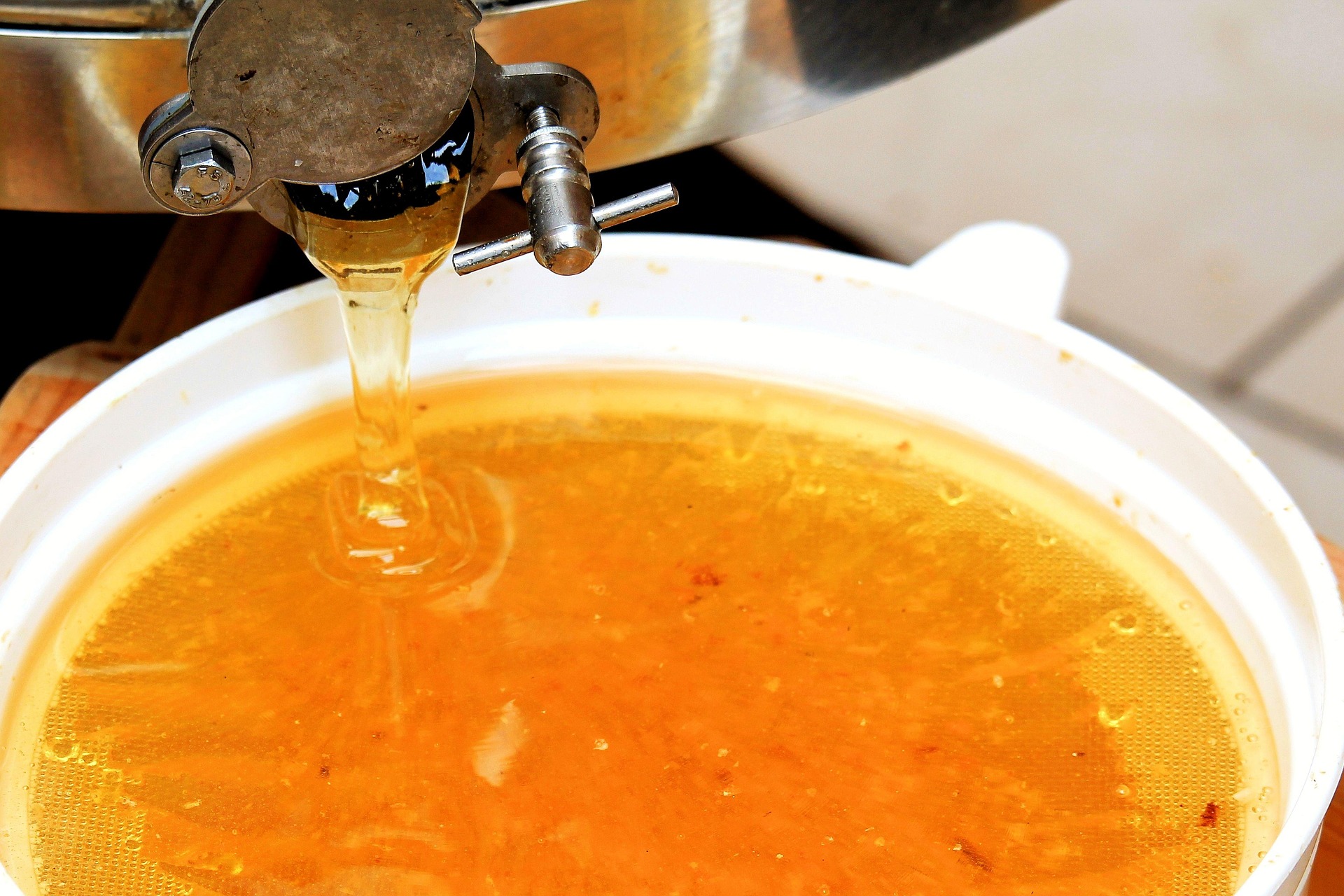
Honey is carefully pulled from the honeycomb using an extractor.

Step 7: Honey Is Removed From the Comb

When the honey is ready and the colony has enough food remaining, the beekeeper removes the selected frames from the hive.

The thin wax cappings must be taken off before the honey can leave the cells. Beekeepers may use an uncapping knife, uncapping fork, or another specialized tool to gently open the cells.

The frames are then placed inside a honey extractor.

An extractor spins the frames, using centrifugal force to pull the honey from the comb. The honey runs down the sides of the extractor and collects at the bottom.

Because the wax comb usually remains intact, the frames can be returned to the hive. The bees can clean, repair, and refill the cells, saving them the considerable energy required to build entirely new comb.

Step 8: The Honey Is Strained and Bottled

After extraction, the honey is strained to remove pieces of wax and other small particles that may have entered during harvesting.

It may also be allowed to rest so air bubbles and fine wax particles rise to the surface.

The finished honey can then be poured into clean jars.

Pure honey does not need artificial flavoring to develop its distinctive taste. Its color, aroma, and flavor are influenced by the flowers the bees visited.

Honey produced from different nectar sources may be:

  • Light and mild
  • Dark and robust
  • Floral or fruity
  • Rich, earthy, or slightly spicy

Even honey harvested from the same apiary can taste different from one season to the next because different plants may be blooming.

What Does “Raw Honey” Mean?

The term raw honey generally describes honey that has been handled with minimal processing.

It is commonly strained to remove larger pieces of wax and debris but is not subjected to the high-heat processing often used in large-scale commercial production.

Because labeling terms and processing practices can vary, the best way to understand how honey was handled is to ask the beekeeper who produced it.

Raw honey is processed with minimal handling and no heating so natural enzymes stay in tact.
Buying directly from a local beekeeper gives customers an opportunity to learn where the honey came from, how it was harvested, and how the bees were managed.
Honey produced from different nectar sources may be:

  • Light and mild
  • Dark and robust
  • Floral or fruity
  • Rich, earthy, or slightly spicy

Even honey harvested from the same apiary can taste different from one season to the next because different plants may be blooming.

Honey is carefully extracted from the honeycomb.

Why Does Honey Crystallize?

Crystallization is a natural process and does not mean the honey has spoiled.

Honey contains several types of sugar. Over time, some of the glucose may separate from the liquid and form crystals. The speed of crystallization depends on the nectar source, storage temperature, and other characteristics of the honey.

Some varieties remain liquid for a long time, while others crystallize relatively quickly.

Crystallized honey is safe to eat and can be enjoyed as a spread. To return it to a more liquid consistency, place the closed jar in warm water and allow it to heat gradually. Avoid overheating it.

Honey produced from different nectar sources may be:

  • Light and mild
  • Dark and robust
  • Floral or fruity
  • Rich, earthy, or slightly spicy

Even honey harvested from the same apiary can taste different from one season to the next because different plants may be blooming.

A Spoonful of Honey Represents a Whole Colony

Honey is more than a sweetener.

It is the preserved result of blooming plants, favorable weather, healthy soil, attentive beekeeping, and the coordinated work of an entire honeybee colony.

From the moment a forager lands on a flower to the moment a beekeeper fills a jar, every stage depends on timing, communication, and cooperation.

The next time you open a jar of honey, take a moment to notice its color, aroma, and flavor. Each jar reflects the landscape the bees explored and the flowers that were blooming when the nectar was gathered.

That is what makes every honey harvest—and every jar—unique.

Honey produced from different nectar sources may be:

  • Light and mild
  • Dark and robust
  • Floral or fruity
  • Rich, earthy, or slightly spicy

Even honey harvested from the same apiary can taste different from one season to the next because different plants may be blooming.

Honeycomb cells are carefully crafted to prevent honey from spilling out.

Support Local Bees and Beekeepers

Choosing locally produced honey helps support beekeepers who care for colonies in your community. It also creates an opportunity to learn more about the bees, plants, and seasonal conditions behind the harvest.

At Golliher Road Apiary, we are proud to share the story of honeybees and the remarkable process that turns flower nectar into one of nature’s most treasured foods.

Follow Golliher Road Apiary for more information about honeybees, pollinators, beekeeping, and upcoming opportunities to purchase our honey.

How Honey is Made

How Honey is Made

How Honey is Made

How Honey is Made

Similar Posts